Winery
Lucca

history and identity of Colle delle 100 Bottiglie
My passion for wine and viticulture is rooted in a family history that began many years ago, in the heart of the Lucca area. When my father, tired of the constant care required by the small family vineyard, considered replacing it with a less demanding olive grove, I decided to oppose it. For me, that vineyard represented much more than a crop: it represented a profound connection to the land and the local agricultural tradition.
So I chose to take charge of it myself, starting by learning the rudiments of viticulture in Lucca and, in the cellar, the fundamental principles of oenology. My training was not academic but practical, guided by the invaluable teachings of two elderly farmers who instilled in me experience, method, and respect for the land.
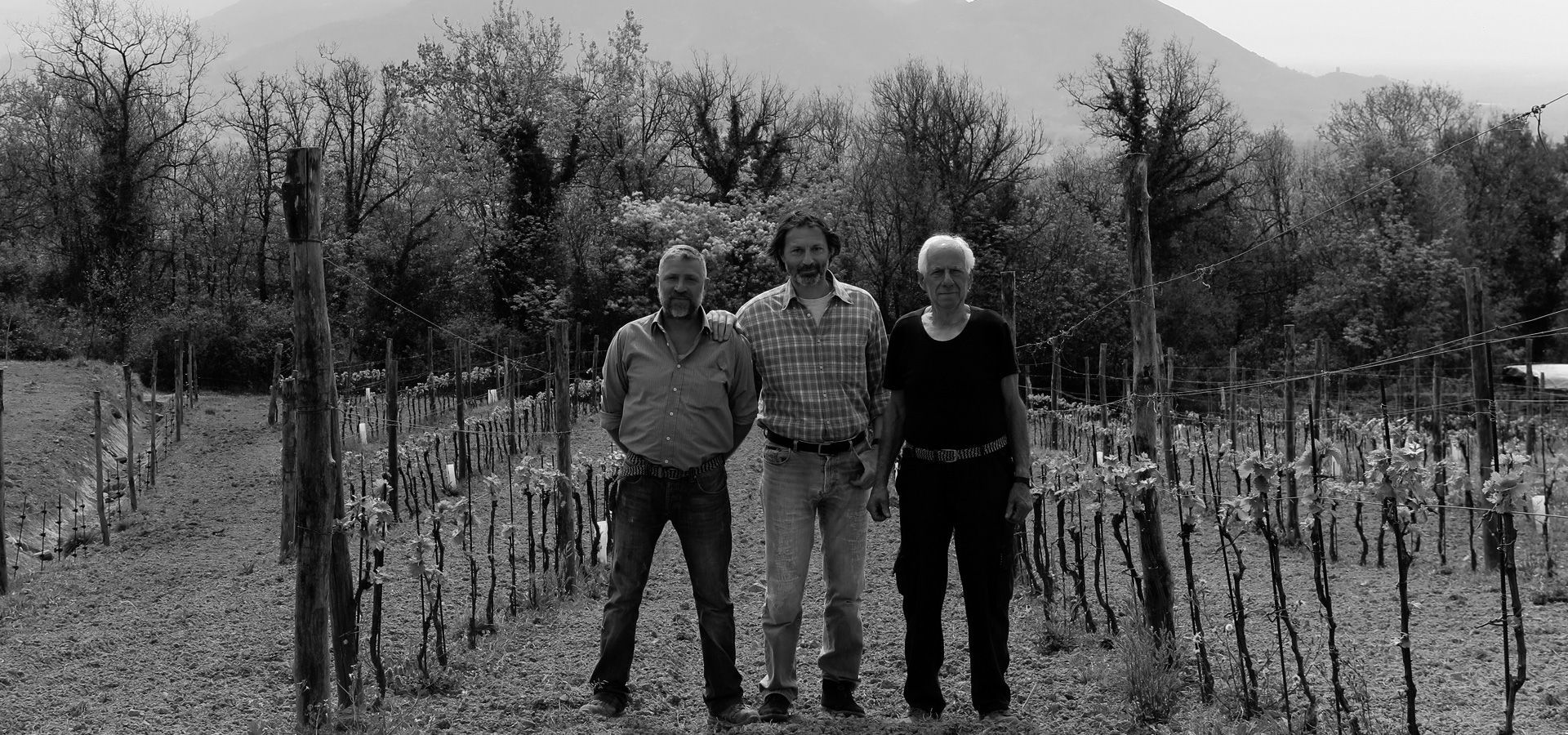
Over time, what began as a sentimental choice evolved into a more structured project. On the first plot of land I purchased, then abandoned, in addition to reclaiming the existing tree plantations, I decided to plant about a hundred vines. This was no coincidence: the cuttings came from a historic vineyard in Lucca, with the specific aim of preserving authentic and strongly identifiable varieties.
Those vines were a gift from Guido and Giuseppe Cozzoli, farmers who helped make Segale wine famous. They entrusted me with cuttings of Moscato Rosa and Aleatico Lucchese, aromatic and traditional varieties of the area, emphasizing their intense and fragrant character with a simple yet effective expression: "They are like pepper for a roast." An image that perfectly describes the strength and personality of these grapes.
Segale is a small plot of land cultivated by the same family for over four centuries, a place where vines over a hundred years old still stand. This agricultural heritage represents a tangible testament to the winemaking tradition of the Lucca area and forms the foundation of a process aimed at promoting historic crus and protecting local varieties.
THE FIRST THREE ROWS
The first three rows planted on my property were dedicated to Rye grapes, a variety symbolic of the local tradition. From those first hundred vines, the name of my winery in Lucca took shape, a project that was initially just a dream: Hill of 100 Bottles. The meaning is tied to the farming practice itself: from one vine, when properly thinned and not overcrowded, you generally obtain one bottle of wine. Quality over quantity, right from the start.
A few years later, completely unexpectedly, my journey brought me back to Segale. I had decided to officially establish the company, thanks in part to the opportunity offered by a regional call for proposals for agricultural development. Although the business still existed only on paper, a renowned winemaker from Lucca, appointed by the owners, was looking for new managers for the historic Segale vineyard.
He trusted me because he knew my dedication to viticulture. I accepted the proposal as a unique opportunity to consolidate my winery project in Lucca, strengthening my connection with one of the most iconic crus of the Lucca area. That experience also gave rise to the company motto, echoed in the logo of the blackbird with a grape in its beak: "dum volo deligo," or "I pick in flight," an expression that encapsulates the idea of conscious choice and attention to quality.
Meanwhile, the managed land area increased with the purchase of the Vigna del Prete, located beneath the church of San Concordio di Moriano, in Maolina, not far from my father's house. Only later did I discover that the previous owner was related to the Cozzoli brothers from Segale: a further coincidence that strengthened the common thread of this agricultural history.
Thus, my passion for wine has transformed into a concrete profession, rooted in the Lucca area, with a daily commitment to living up to the tradition I represent.
OUR PHILOSOPHY
Land abandonment and reclamation: these are the concepts that have guided many of the decisions of our winery in Lucca. Preventing abandonment and restoring value to land, vineyards, and olive groves is the founding principle of the project. The goal is to reclaim neglected agricultural areas, bringing them back to life while respecting the environment and contributing to the preservation of the landscape of the Lucca hills.
The path we've undertaken stems from the ambition to create wines that are the authentic expression of a meticulously tended countryside, almost like a garden. The idea is to condense into the final product the form and substance of a preserved terroir, where each row of vines tells a specific agricultural story. Being able to say that "grapes grow in our gardens" encapsulates a vision: quality and landscape harmony as inseparable elements.
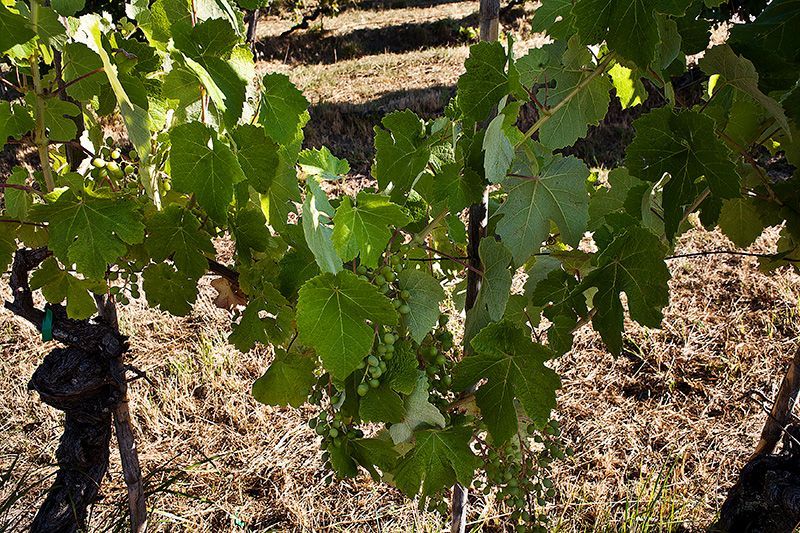
Estates like Segale and La Maolina are a historic asset to the Lucca community, long associated with fine wine in the local community. The recovery of these historic crus isn't limited to production alone, but extends to safeguarding their cultural and identity value. We recognize that this is a challenging process, but it's a choice consistent with the mission of our winery in Lucca.
The restoration efforts also include maintaining some manual farming practices, such as tying the vines with willow twigs. These techniques may seem anachronistic, but they are designed to maintain continuity with tradition and respect the natural rhythms of cultivation.
The idea of reclaiming land from neglect, preserving ancient methods, and promoting tradition converges in a single goal: to avoid production standardization and maintain a recognizable agricultural identity. This approach sometimes involves choices less oriented toward economic maximization, but it generates a different value, founded on three central principles: environmental protection, landscape restoration, and authentic terroir valorization.
The Lucca hills, a secluded and unique part of Tuscany, represent the ideal setting for this vision. Our philosophy is based on a clear premise: the quality of the land's products is a natural consequence of the beauty of the landscape that generates them. A harmonious, cared for, and respected land creates the conditions for producing wines and olive oil consistent with their origins.
For this reason, the choice to adopt organic farming was not an afterthought, but a logical consequence of the project: safeguarding the soil, biodiversity, and environmental balance means guaranteeing authenticity and consistency in agricultural production.
OUR WORK
Luckily, our land is located in two historic crus in the Lucca area: Maolina and Segale. They face south, southwest, and range in elevation from 100 to 400 meters. These well-ventilated, sunny areas, with soils of varying composition—the more mineral-rich Rye and the more clayey Maolina—are well-suited to viticulture and olive growing.
When working these lands, it's no coincidence that they call it "heroic agriculture," because here machines cannot replace all manual labor, given the morphology of the terrain: rugged, sometimes steeply sloped, and with narrow terraces. This manual labor requires a very close, physical connection with nature, which, beyond the arduousness of the task, or perhaps precisely because of it, provides vivid sensations, reestablishing a truly empathetic relationship with nature, built on feelings of dependence, respect, awe, and gratitude.
To improve the quality of the fruit, we thin the grapes in the vineyard, and to ensure the wines retain a typical character and a distinct terroir, as was once the case when selected yeasts did not exist, we use spontaneous fermentations (controlled temperatures). The result is a wine with a distinctive personality and superior quality, although, in our opinion, it's only the techniques used that give the wine its soul, but rather the entire history that precedes it.
This also applies to our extra virgin olive oil, made from our organically grown olives, harvested and processed the same day in our company's mini-mill at low temperatures and with minimal malaxation. Our mini-mill processes the olives into oil in two stages, rather than three like traditional mills, ensuring a more delicate extraction and a less stressed product. This guarantees a result in which the quality is immediately evident in the taste and aroma, in an oil that preserves the characteristics of the olives.
AWARDS


FAQ
What distinguishes your winery in Lucca?
Our winery in Lucca stands out for its restoration of historic vineyards such as Segale and La Maolina, its adoption of organic farming, and its appreciation of the Lucca terroir.
Which vineyards do you manage in the Lucca area?
We manage and enhance historic vineyards in the Segale and Maolina areas, as well as other properties recovered from abandonment and brought back to new productivity.
Do you use sustainable farming methods?
Yes, we adopt environmentally friendly agricultural practices, while also maintaining traditional manual techniques and following an organic approach to cultivation.
What is the production philosophy of your winery in Lucca?
Our philosophy combines quality, respect for the landscape, and preservation of tradition, with the goal of producing wines that are an authentic expression of the Lucca hills.